.png&w=3840&q=75)
Blog
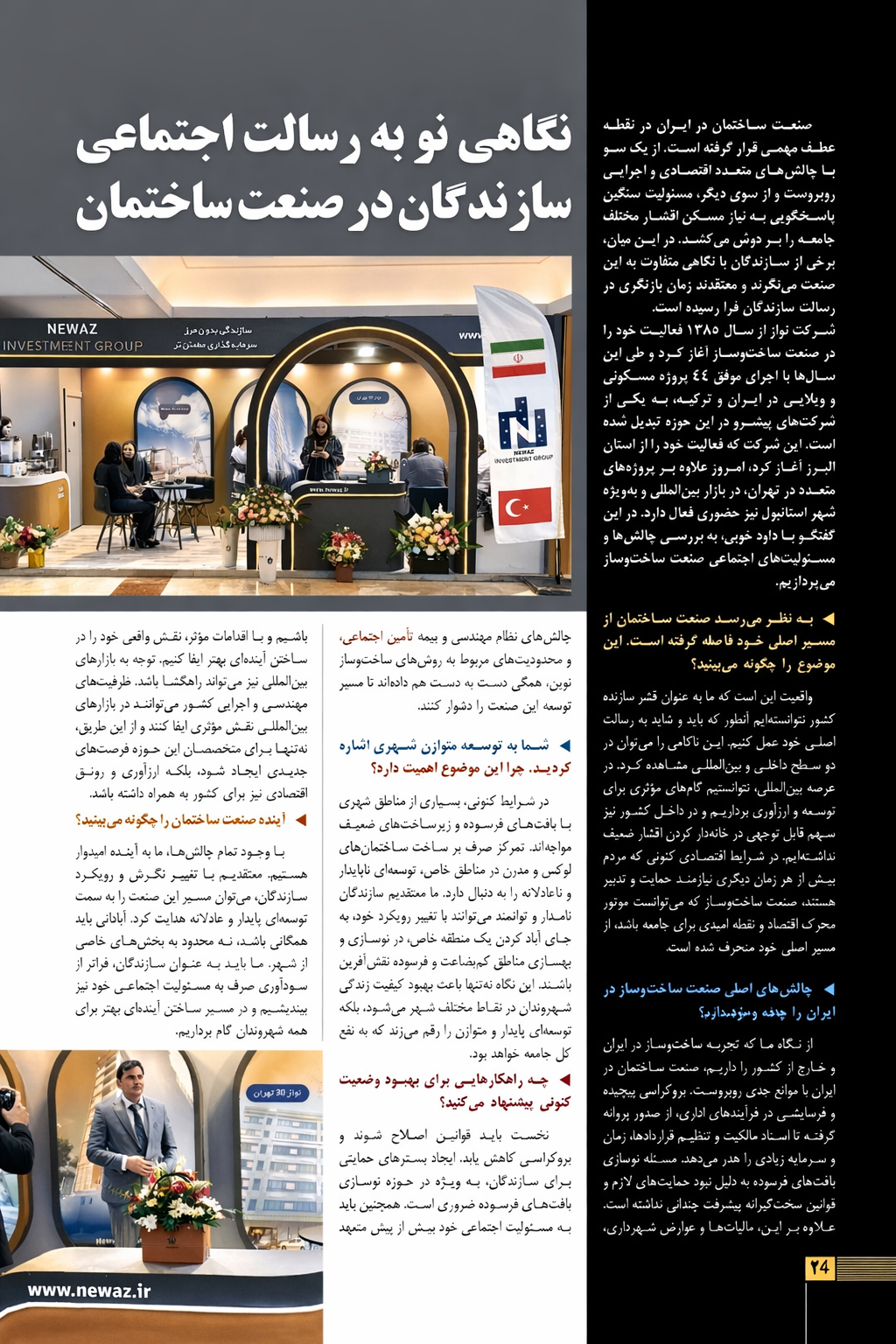
Interview of Mr. Daoud Khobi by Donya-e-Eqtesad newspaper
English — Miracle of Turkey’s Housing Market
Will Property Buyers in Turkey Face the “Dubai-2009” Fate?
Newspaper Number: 5085
Publication Date: 25/10/1399 (Solar Hijri Calendar)
News Number: 3731099
Category: Housing & Urban Development
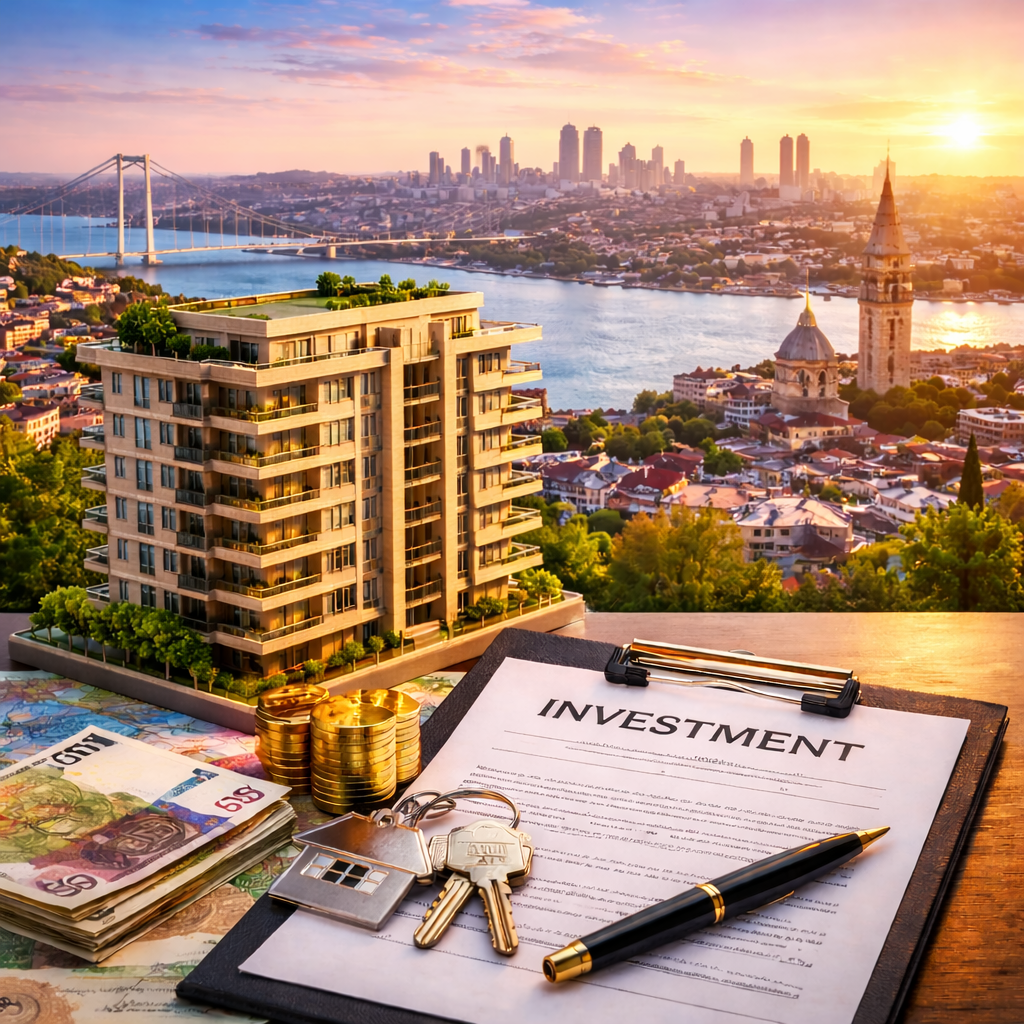
Donya-e-Eqtesad: Turkey’s housing market has been introduced as one of the top 20 real estate investment markets in the world. Statistics on foreign investment from certain countries by Turkish developers reflect this advantage to some extent. However, the growth level of Turkey’s property sector can serve as a model of prosperity for countries struggling with housing crises, while the unconventional rise in property prices in Turkey can serve as a meaningful warning for investors.
Official statistics show that foreign buyers account for nearly 5% of annual apartment transactions in Turkey. In 2020, despite a drop of over 5% in local transactions by Turkish citizens, foreign property purchases increased by more than 10%. Iranians are the largest foreign buyers, accounting for nearly 18% of all foreign property purchases in the first nine months of 2020.
During this period, 6,445 properties were sold to Iranians, compared to 792 units in 2017 — an eightfold increase over three years. Other foreign investors also participate, though less than Iranians. Turkey ranks as the fifth cheapest housing market among 103 countries analyzed.
A key reason for foreign investment growth is the “loan miracle” — a policy Turkey implemented to finance the housing sector, stimulating both supply and demand with attractive, efficient loans. Access to construction loans and purchase loans for new units has motivated companies to invest in large-scale residential projects.
Turkey’s housing market has six main attractions for foreign buyers:
Mortgage loans covering 70–75% of the property value (“miracle” effect),
5-year loans for new units,
Extensive construction loan programs,
Turkey’s attractiveness as the 6th largest tourist destination,
Ability to purchase property in 20 days,
Low value of the Turkish lira against the USD (7x currency power) and granting citizenship to foreign owners.
However, the market can be partially empty, which may not yet be visible to investors. Average housing prices in October 2020 rose 23% compared to the previous year, while inflation was much lower, and prior annual increases were below 23%. Some experts warn of a housing bubble, recalling Dubai 2007–2008, when foreign purchase waves led to massive losses the following year.
Global investment opportunities span from 5-star villas in Portugal to luxury coastal apartments in the US and row villas in Dubai. Investors understand that successful investment requires thorough analysis of statistics, trends, forecasts, and hot spots. Over the past decade, Turkey has become one of the most attractive real estate markets for foreign investors.
Despite the pandemic, Turkey’s foreign property sales increased for the fifth consecutive month. In September 2020, foreign purchases rose 26% year-on-year and 35% month-on-month, reaching 5,269 units — the second-best September on record. The total for 2020 is expected to exceed 40,000 units, bringing over $7 billion in foreign exchange to Turkey’s economy.
By city: Istanbul leads with 2,370 units (≈45% of foreign sales), followed by Antalya (1,118 units, 19%) and Ankara (348 units, 6%). Istanbul developers offer long-term payment plans (up to 5 years) and pre-sale discounts with no interest.
By nationality: Iranians lead with 908 units (~17%), followed by Iraqis (826) and Russians (448). From January–September 2020, Iranians purchased 4,716 units, Iraqis 4,165, Russians 1,895, Afghans 1,277, and Azerbaijanis 711.
Why Turkey is Attractive: Remote Ventures’ study of 200 countries ranked Turkey 14th among 25 most attractive real estate markets. CEO Matthew Campbell notes: “Turkey has a large economy, world-class cities with beautiful coasts, proper visas and residency opportunities, rich culture and history, dynamic demographics, stable tourism, low living costs, and more — all factors that make it attractive for investment.”
Affordable Prices: Since the early 2000s, Turkey implemented housing revival programs. Banks provided construction loans to developers and mortgages for buyers. Foreigners were allowed to participate. This created a billion-dollar real estate industry, expanded housing supply, and maintained affordable prices.
Diverse Inventory: The abundance of properties ensures more choices for buyers, with many opting for pre-sale or new properties rather than existing homes.
International Connectivity: Turkey invested billions in infrastructure — e.g., Konyaaltı coastal ports, yacht harbors, and Istanbul New Airport (to be world’s largest in 2027, 150M annual passengers).
Tourism: Turkey ranks among the top 10 tourist countries, making investment attractive for rental income. Integrated flights, tours, attractions, shopping centers, and restaurants enhance tourist experience.
Purchase Process: Turkey offers a fast, low-cost, and minimal bureaucracy process. Keys and title deeds can be obtained within three weeks. Foreigners may buy up to 33,000 hectares without permits (except for five restricted countries).
Citizenship: With $250,000+ investment, investors, spouses, and children can apply for full Turkish citizenship, provided the property is held minimum 3 years with independent valuation.